Roof Repair in Chicago, IL
Chicago Roofing Team handles roof repair from leaks to storm damage, stopping water intrusion before it damages framing and decking beneath. We patch failed flashing, reseal gutters, replace missing or curled shingles, and shore up residential roofing before small problems become expensive ones. Call 312-313-3253 for a free estimate—we're licensed and insured.
Call 3123133253What Roof Repair Involves
Roof repair is a targeted fix to stop active leaks, restore damaged shingles, and shore up failing flashings—the metal strips that seal joints where the roofline meets walls, chimneys, and vents. Unlike replacement, repair focuses on problem spots: deteriorated shingles, cracked valleys, flashing pulled from the substrate, or boot failures around pipe penetrations.
When water seeps beneath the roofline, it erodes the roof deck—the plywood or OSB sheathing that carries the structural load. Left unchecked, rot spreads to rafters, trusses, and ridge beams supporting the entire structure.
Materials Used in Roof Repair
- Asphalt shingles: GAF Timberline HD architectural shingles, Owens Corning Duration premium shingles, and CertainTeed Landmark composite shingles are standard for Chicago homes.
- Three-tab shingles for lower-cost repairs, though architectural grades resist wind better and last longer.
- Step flashing where the roof meets a vertical wall or fascia—the primary leak point on residential roofing.
- Chimney flashing and counterflashing to redirect water down and away from masonry.
- Pipe boots and vent boots around plumbing, HVAC, and bathroom vents, sealed with roofing mastic and caulk.
- Ice-and-water shield in valleys and at eaves, required by Chicago building code for freeze-thaw zones.
- Synthetic underlayment beneath shingles (which replaced older felt and tar paper) breathes and drains better.
- Ridge vents at the peak of gable and hip roofs to exhaust moist attic air.
- Drip edge at eaves and rakes to guide water into gutters and downspouts, not into the fascia or soffit.
- Ridge caps covering the apex where two roof planes meet, fastened with ring-shank nails and hand-sealed with roofing cement.
- Roof cement, caulk, and mastic at every joint and fastener location to ensure watertight seals.
For flat roofs or commercial buildings, we repair TPO, EPDM, and PVC membrane systems, as well as built-up roof and modified bitumen assemblies.
Warning Signs You Need Repair Now
- Water stains on ceiling or walls—active leaks from above that will spread into framing if not stopped.
- Missing or curled shingles exposing the underlayment to UV and rain.
- Granules in gutters and downspouts (shedding from aged shingle surfaces).
- Daylight visible through the attic or roof decking from inside.
- Flashing separated or pulling away from the roof or wall, especially at chimneys and skylights.
- Mold or mildew on the roofline, soffit, or fascia—evidence of prolonged moisture trapped in the structure.
- Sagging or settling of the roof deck, indicating joist or rafter failure.
- Wind-lifted shingles after prairie storms, exposing fasteners and leaving seams vulnerable to water intrusion.
Roof Repair Cost & Timeline in Chicago
Small repairs (a few shingles, flashing recaulking) cost $300–$800 and take one day. Medium repairs (20–30% coverage, multiple flashing points, new underlayment sections) run $1,500–$3,500 over 1–2 days.
Large repairs, including tear-off and recovery (removing shingles to access the substrate, then reinstalling), range $4,000–$8,000+ over 2–3 days depending on roof pitch, valley count, and skylight or dormer complexity.
Chicago building code requires a permit for repairs exceeding 25% of total roof area. We file all permits and coordinate inspections.
The Repair Process: Step by Step
- Roof inspection: We photograph shingle wear, flashing integrity, roof deck condition, vent boots, ridge vents, drip edges, and valleys. We inspect the attic for water stains, rot, vapor barrier condition, and ventilation adequacy.
- Safety setup: We install safety harnesses, set up ladders and scaffolds, and position a dumpster for debris. The work zone is marked and protected.
- Tear-off and deck repair: Using roofing shovels and pry bars, we strip old nails and shingles down to the substrate. This tear-off exposes the plywood or OSB so we can inspect and replace any rotted decking, joists, or purlins.
- Install underlayment and flashing: New synthetic underlayment is laid across the repair zone. Step flashing, chimney flashing, pipe boots, and vent boots are installed and sealed with roofing mastic. Valleys receive roofing felt or self-adhered membrane.
- Lay new shingles: We install a starter course at the eave, then lay field courses in staggered pattern per building code. Each shingle is fastened at the correct locations. Ridge caps are hand-sealed at the peak with roofing cement.
- Cleanup and final walk: Debris is removed, gutters flushed, and a final roof walk confirms every seal, fastener, and flashing joint. We verify soffit vents are clear and attic fans (if present) are operational.
Chicago Weather & Roof Durability
Chicago's climate is aggressive on roofing. Winter freeze-thaw cycles create ice dams when gutters clog. Snow melt backs up under shingles; when it refreezes, water is forced into the attic, rotting insulation and structural members.
Summer prairie storms bring wind uplift damage and hail impact. Thermal expansion cracking occurs when temperature swings 40°F in a single day.
Schedule repairs before winter and after major storms to prevent rot and decay from spreading deeper into the structure.
Special Roof Shapes & Repair Challenges
Gable roofs (two sloping planes meeting at a ridge) are straightforward. Hip roofs (four sloping planes with a ridge running the length) have more valleys where water collects and leaks start.
Dormers, skylights, and chimneys add multiple flashing points—each a potential leak source. Mansard and gambrel roofs have slopes that change angle; they require specialized flashing and careful valley construction.
Canopies and awnings attached to the main roof must have proper apron flashing and counterflashing to prevent water from seeping behind them.
Tools, Safety & Professional Standards
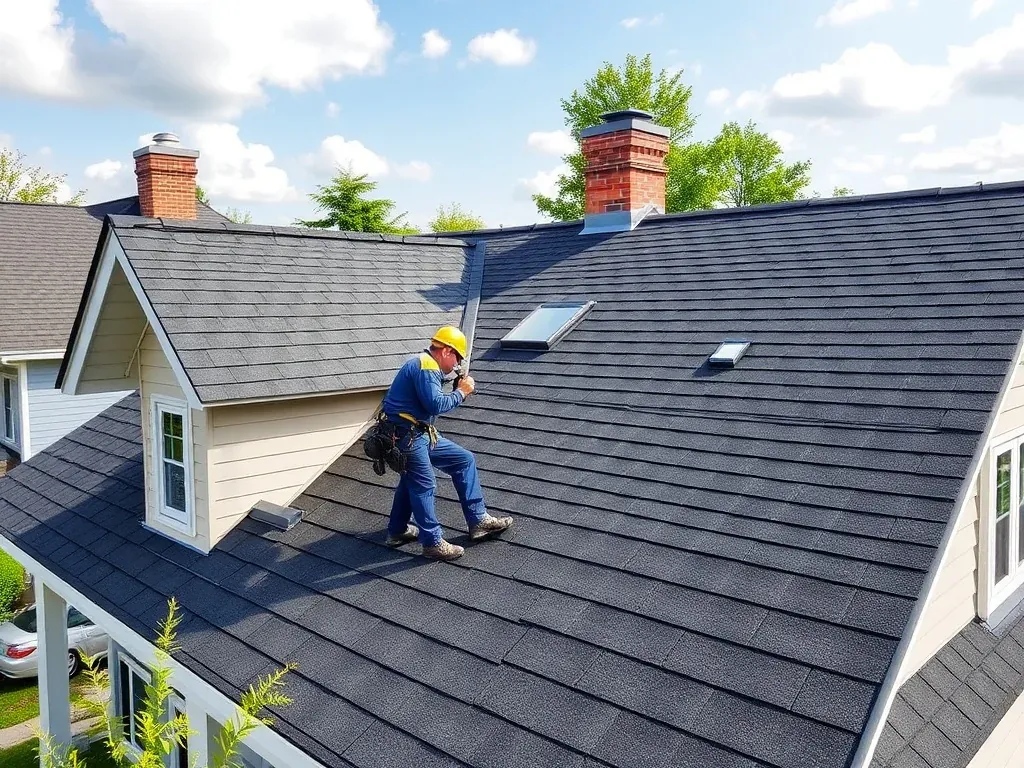
We use professional-grade tools—roofing squares, nail guns, air compressors, and pry bars—for precise installation. Every crew member uses safety harnesses, ladders, and scaffolds on steep roofs. A dumpster on-site ensures debris is managed cleanly.
For flat roofs with parapets and coping, we seal flashing where the coping meets the roof deck. Roof anchors secure safety lines and snow guards on steep roofs. Overhangs, soffits, and fascia boards are inspected and repaired to direct water into gutters and downspouts properly.
Insurance Claims & Warranty
Storm damage (hail, wind, lightning) is typically covered by homeowners insurance. We provide a detailed roof estimate and photographs for your insurance adjuster. If a supplemental claim is approved, we execute the repair per the insurance scope.
Our roof repairs carry a 10-year workmanship warranty on all labor and materials. We stand behind every seal, fastener, and flashing joint.
Why Asphalt Shingles Dominate in Chicago
Asphalt shingles are standard for residential roofing because they're cost-effective, wind-rated for prairie exposure, and rated for ice dam environments. We also repair metal roofing (standing-seam metal panels and corrugated panels), wood shakes and cedar shakes, slate, clay tile, and concrete tile—but asphalt shingles remain the most common repair material in Chicago homes.
Each material requires specific flashing and fastening techniques. We know them all.
What's Included
- Professional roof inspection identifying leaks, failed flashing, and deteriorating shingles.
- Removal of damaged shingles and old roofing material down to the substrate.
- Replacement of rotted plywood or OSB decking.
- Installation of ice-and-water shield and synthetic underlayment where required by code.
- New flashing (step, chimney, pipe boots) sealed with roofing mastic.
- Asphalt shingles (GAF, Owens Corning, or CertainTeed) color-matched to existing roof.
- Ridge cap installation with hand-sealed fasteners and roofing cement.
- Site cleanup, debris removal, and gutter flushing to ensure proper drainage.
Our Roof Repair Process
- Inspection: We photograph shingle wear, flashing condition, deck integrity, and attic moisture signs before quoting any work.
- Safety setup: Safety harnesses, scaffolds, and ladders are installed. Debris dumpsters and protective tarping protect your property.
- Tear-off and deck repair: Old shingles and nails are removed. We inspect and replace any rotted plywood or OSB in the repair zone.
- Underlayment and flashing: Synthetic underlayment is laid. Step flashing, chimney flashing, pipe boots, and vent boots are installed and sealed with mastic.
- Shingle installation: New shingles are laid in staggered courses with fasteners at proper spacing. Ridge caps are hand-sealed at the peak.
- Cleanup and final walk: Debris is removed, gutters flushed, and a final roof walk confirms every seal and fastener.
Signs You Need Roof Repair
6 Signs Your Roof Needs Repair
- Water stains on ceiling or walls indicating active leaks from above.
- Missing, cracked, or curled shingles exposing the underlayment.
- Granules accumulating in gutters and downspouts from aging shingle surfaces.
- Daylight visible through the attic or roof decking from inside the home.
- Flashing separating from walls, chimneys, or skylights at the roofline.
- Wind-lifted shingles after prairie storms, leaving fasteners exposed to water entry.
- Mold or mildew on the soffit, fascia, or roofline from trapped moisture.
- Sagging or settling of the roof deck indicating structural damage to rafters or trusses.
Don't just take our word for it — hear from our satisfied customers.
"Water was dripping in our attic after a spring storm. Chicago Roofing Team was out the next day, identified two failed flashings and a cracked valley, and patched it all for under $2,000. They were licensed, insured, and left no mess. I'd call them again in a heartbeat." — Jennifer M., Lincoln Park
"Our 1970s ranch in Wicker Park had chronic ice dam problems every winter. The team replaced the underlayment with ice-and-water shield, installed a ridge vent, and my attic has stayed dry for two seasons. Professional work at a fair price." — Robert T., Wicker Park
"After a hail storm, we filed an insurance claim. Chicago Roofing Team provided the estimate, coordinated with the adjuster, and completed the repair in one day. The new shingles match perfectly, and the warranty gives us peace of mind." — Maria C., Pilsen
Ready to get started? Call us today at 3123133253 for a free estimate.
Free estimates · Licensed & Insured · 25-year warranty
Call 3123133253